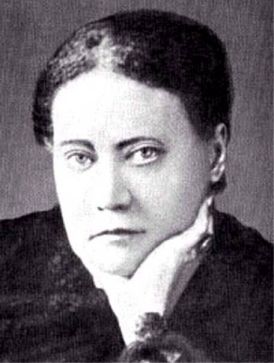
H
P Blavatsky
A BRIEF BIOGRAPHICAL SKETCH
She was born on
Her child-life was one
of surpassing interest to any student of the beginnings of human greatness, for
even then she gave promise of the spiritual and intellectual energies which
later were to blossom forth in splendor in her mature age. She was a born
Mystic in the ancient sense of the word; that is to
say, one whose inner
life was controlled by a dominating influence of spiritual type, surging
through the mere personality as a stream of intimations and intuitions that
could neither be stayed nor turned aside, and which ruled the destiny of the
mere personality through which its spiritual stream passed.
On July 7, 1849, when
she was seventeen years old, she entered into a formal marriage with Nikifor V. Blavatsky, Vice-Governor of the Province of Yerivan' in the Caucasus, who was 23 years her senior. But
this marriage was a mere formality and within a few months at most it
eventuated in a permanent separation. Thereupon began the series of travels at
her father's expense in
It was in 1851 that she
first met her Teacher personally in
In 1855 she was in
In 1867 she returned to
the Orient, and some years afterwards revisited
In the following year
she met Colonel Henry Steel Olcott and William Quan Judge, both of whom were to
play important parts as collaborators with her in her great work and as
co-founders of The Theosophical Society.
In 1874 H. P. Blavatsky
began writing for various American publications. On
September 7, 1875, at a
meeting in her own rooms in New York, there was proposed the formation of a
society for the study of various mystical and quasi-mystical subjects. On the
following day, the Theosophical Society was formed there at her home. There
were then present H. P. Blavatsky, Henry S. Olcott, William Quan Judge, and
thirteen others. On September 13, the name 'The Theosophical Society' was
adopted.
In 1877 H. P.
Blavatsky's first great book,
On
In this year she founded
and edited the magazine Lucifer in
Under her inspiration
and directing genius the various branches and centers of the Theosophical
Society in European countries grew apace, while the literary and
propaganda-work which she had inaugurated in India some years before pursued
its own course, a course which can hardly be characterized otherwise than as
rather slow and painful, because her departure from India had removed from the
Indian sphere the immediate influence and inspiration of her pen, her tireless energy,
and her wonderful mind. The work in America, meanwhile, even from a time as far
back as 1882, had been growing steadily, and at the time of H. P. Blavatsky's
passing the 'American Section,' as it was then called, was the most active,
widely spread, and strong in membership of any of the various Sections of the
Theosophical Society.
The Great Teacher, the
Mover of men's hearts, and the inaugurator in very truth of a new civilization
among men, a civilization founded upon spiritual ideals and cosmic verities,
passed away quietly in her armchair, surrounded by a few of her attendants and
friends, on the morning of May 8, 1891.
Legend has begun but has
not yet succeeded in weaving around her memory and her personality those
outlines of figure and type, based on reverential but imperfect knowledge,
which at the present time portray to us Occidentals the distorted figures of
other great World-Teachers of the past. True reverence should need no such
fictitious embellishments of truth.
A World-Teacher stands
firm through the ages upon the basis of fact which is the work that he wrought;
and let us hope that this grand and imposing figure, H. P. Blavatsky, may
forever remain clear in our memories and sharp in the outlines of truthful
delineation, untouched by the blurrings and
embellishments of fancy and story, however reverential in origin such later
fancy may be. We must see her as she was, not as fancy would portray her to
have been; we must see her as she passed across the pages of history: grand,
truthful, powerful, clear-cut, splendid, a martyr to her world-work, and a much
misunderstood benefactor of her fellow-men.
___________________________________________
This brief chapter gives
only an outline-sketch of the life of H. P. Blavatsky, considered as a
personality. Some of the dates given are uncertain, as available information is
often contradictory. One of these days someone with full leisure at his
disposal and with a mind stocked with wide reading on the fascinating events in
the life of the Great Theosophist, will give to the world a full, truthful, and
fascinating study of the great Russian woman who, without any reservation
whatsoever, is to be called the most remarkable and interesting figure of her
age -- indeed, of any age known to history.
Find out more about
Theosophy
with these links
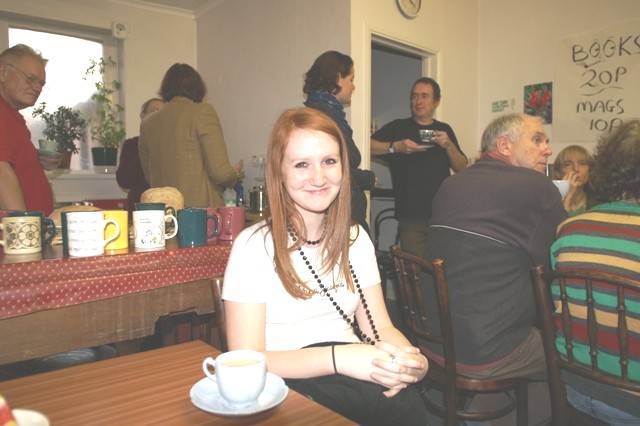
Cardiff Theosophical Society meetings
are informal
and there’s always a cup of tea afterwards
The Cardiff Theosophical Society Website
The National Wales Theosophy
Website
Theosophy Cardiff’s
Instant Guide to Theosophy
Theosophy
Cardiff’s Gallery of Great Theosophists
Dave’s Streetwise
Theosophy Boards
The Theosophy Website that
welcomes
If you run a Theosophy Study
Group, please
feel free to use any material on
this Website
Independent Theosophy Blog
The Most Basic Theosophy
Website in the Universe
A quick overview of
Theosophy
and the Theosophical Society
If you run a Theosophy Study
Group you
can use this as an introductory handout.
One liners and quick explanations
About aspects of Theosophy
The Voice of the Silence Website
An Independent
Theosophical Republic
Links to Free Online
Theosophy
Study Resources; Courses, Writings,
The main criteria for the
inclusion of
links on this site is that they
have some
relationship (however tenuous) to
Theosophy
and are lightweight, amusing or
entertaining.
Topics include Quantum Theory
and Socks,
Dick Dastardly and Legendary Blues Singers.
An entertaining introduction to Theosophy
For everyone everywhere, not just in Wales
It’s all “water under the
bridge” but everything you do
makes an imprint on the Space-Time
Continuum.
A selection of articles on
Reincarnation
Provided in response to the
large number
of enquiries we receive on this
subject
No
Aardvarks were harmed in the
National Wales Centre for Theosophy
Blavatsky Wales Theosophy Group
The
Spiritual Home of Urban Theosophy
The Earth Base for Evolutionary Theosophy
The Birmingham Annie Besant Lodge
_______________________
Tekels Park
to be Sold to a Developer
Concerns about the fate of the wildlife as
Tekels Park is to be Sold to a Developer
Concerns are raised about the fate of the wildlife as
The Spiritual Retreat, Tekels Park in Camberley,
Surrey, England is to be sold to a developer.
Tekels Park is a 50 acre woodland park, purchased
for the Adyar Theosophical Society in England in 1929.
In addition to concern about the park, many are
worried about the future of the Tekels Park Deer
as they are not a protected
species.
Anyone planning a “Spiritual” stay at the
Tekels Park Guest House should be aware of the sale.
Tekels Park & the Loch Ness Monster
A Satirical view of the sale
of Tekels Park
in Camberley, Surrey to a
developer
The Toff’s Guide to the Sale of
Tekels Park
What the men in top hats have
to
say about the sale of Tekels Park
____________________
The Theosophy
The Theosophy
Cardiff Guide to
The Theosophy Cardiff
Guide to
The
Theosophy Cardiff Guide to
The Terraced Maze of Glastonbury Tor
Glastonbury and Joseph of Arimathea
The
Grave of King Arthur & Guinevere
Views
of Glastonbury High Street
The
Theosophy Cardiff Guide to
___________________________
___________________________
A B C D EFG H IJ KL M N OP QR S T UV WXYZ
Complete
Theosophical Glossary in Plain Text Format
1.22MB
___________________________
Classic Introductory
Theosophy Text
A Text Book of Theosophy By C
What Theosophy Is From the Absolute to Man
The Formation of a Solar System The Evolution of Life
The Constitution of Man After Death Reincarnation
The Purpose of Life The Planetary Chains
The Result of Theosophical Study
_____________________
Preface to the American Edition Introduction
Occultism and its Adepts The Theosophical Society
First Occult Experiences Teachings of Occult Philosophy
Later Occult Phenomena Appendix
Try these if you are
looking for a
local
Theosophy Group or Centre
UK Listing of
Theosophical Groups
Pages About
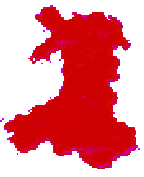
General pages about Wales,
Welsh History
and The History of Theosophy in
Wales
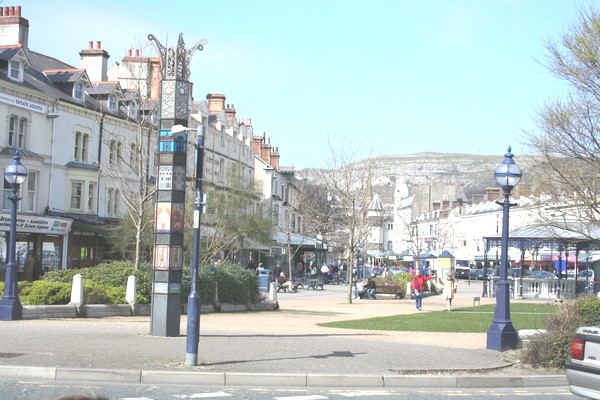
Wales is a
Principality within the United Kingdom
and has an eastern
border with England. The land
area is just over
8,000 square miles. Snowdon in
North Wales is
the highest mountain at 3,650 feet.
The coastline is
almost 750 miles long.
The population of
Wales as at the