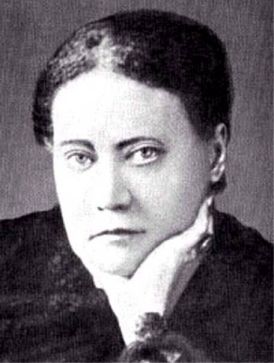
H
P Blavatsky
"Helena Petrovna Blavatsky"
by
The
An Editorial published in the New-York Daily
Tribune
Sunday, May 10, 1891, two days after H. P.
Blavatsky's death.
Few women in our time
have been more persistently misrepresented, slandered and defamed than Madame
Blavatsky, but though malice and ignorance did their worst upon her there are
abundant indications that her life-work will vindicate itself; that it will
endure; and that it will operate for good. She was the founder of the
Theosophical Society, an organization now fully and firmly established, which
has branches in many countries, East and West, and which is
devoted to studies and practices the innocence and the elevating
character of which are becoming more generally recognized continually.
The life of Madame Blavatsky
was a remarkable one, but this is not the place or time to speak of its
vicissitudes. It must suffice to say that for nearly twenty years she had devoted
herself to the dissemination of doctrines the fundamental principles of
which are of the loftiest ethical character. However Utopian may
appear to some minds an attempt in the nineteenth century to break down the
barriers of race, nationality, caste and class prejudice, and to inculcate that
spirit of brotherly love which the greatest of all Teachers enjoined in the
first century, the nobility of the aim can only be impeached by those who
repudiate
Christianity. Madame Blavatsky held that the regeneration of mankind must
be based upon the development of altruism.
In this she was at one
with the greatest thinkers, not alone of the present day, but of all time; and
at one, it is becoming more and more apparent, with the strongest spiritual
tendencies of the
age. This alone would entitle her teachings to the candid and
serious consideration of all who respect the influences that make for
righteousness.
In another direction,
though in close association with the cult of universal fraternity, she did
important work. No one in the present generation, it may be said, has done more
toward reopening the long-sealed treasures of Eastern thought, wisdom, and
philosophy. No one certainly has done so much toward
elucidating that
profound wisdom-religion wrought out by the ever-cogitating Orient, and
bringing into the light those ancient literary works whose scope and depth have
so astonished the Western world, brought up in the insular belief that the East
had produced only crudities and puerilities in the domain of
speculative thought. Her own knowledge of Oriental philosophy and
esotericism was comprehensive. No candid mind can doubt this after reading her
two principal works. Her steps often led, indeed, where only a few initiates
could follow, but the tone and tendency of all her writings were healthful,
bracing and
stimulating. The lesson which was constantly impressed by her was
assuredly that which the world most needs, and has always needed, namely, the
necessity of subduing self and of working for others. Doubtless such a doctrine
is distasteful to the ego-worshippers, and perhaps it has little chance of
anything
like general acceptance, to say nothing of general application.
But the man or woman who
deliberately renounces all personal aims and ambitions in order to forward such
beliefs is certainly entitled to respect, even from such as feel least capable
of obeying the call to a higher life.
The work of Madame
Blavatsky has already borne fruit, and is destined, apparently, to produce
still more marked and salutary effects in the future. Careful observers of the
time long since discerned that the tone of current thought in many directions
was being affected by it. A broader humanity, a more
liberal speculation, a disposition to investigate ancient
philosophies from a higher point of view, have no indirect association with the
teachings referred to. Thus Madame Blavatsky has made her mark upon the time,
and thus, too, her works will follow her. She herself has finished the course,
and after a strenuous life she rests. But her personal influence is not
necessary to the continuance of the great work to which she put her hand. That
will go on with the impulse it has received, and some day, if not at once, the
loftiness and purity of her aims, the wisdom and scope of her teachings, will
be recognized more fully, and her memory will be accorded the honor to which it
is justly entitled.
Find out more about
Theosophy
with these links
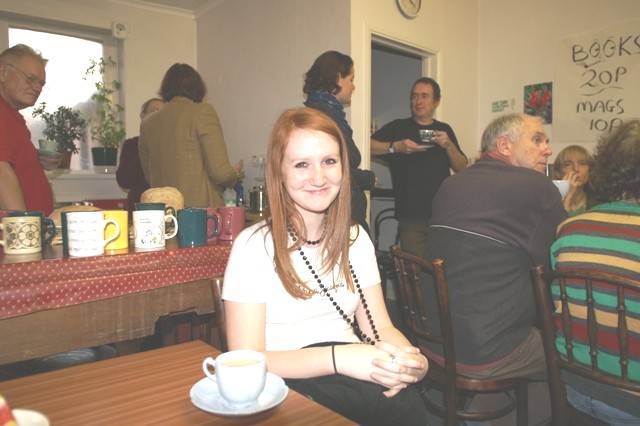
Cardiff Theosophical Society meetings
are informal
and there’s always a cup of tea afterwards
The Cardiff Theosophical Society Website
The National Wales Theosophy
Website
Theosophy Cardiff’s
Instant Guide to Theosophy
Theosophy
Cardiff’s Gallery of Great Theosophists
Dave’s Streetwise
Theosophy Boards
The Theosophy Website that
welcomes
If you run a Theosophy Study
Group, please
feel free to use any material on
this Website
Independent Theosophy Blog
The Most Basic Theosophy
Website in the Universe
A quick overview of
Theosophy
and the Theosophical Society
If you run a Theosophy Study
Group you
can use this as an introductory handout.
One liners and quick explanations
About aspects of Theosophy
The Voice of the Silence Website
An Independent
Theosophical Republic
Links to Free Online
Theosophy
Study Resources; Courses, Writings,
The main criteria for the
inclusion of
links on this site is that they
have some
relationship (however tenuous) to Theosophy
and are lightweight, amusing or
entertaining.
Topics include Quantum Theory
and Socks,
Dick Dastardly and Legendary Blues Singers.
An entertaining introduction to Theosophy
For everyone everywhere, not just in Wales
It’s all “water under the
bridge” but everything you do
makes an imprint on the Space-Time
Continuum.
A selection of articles on
Reincarnation
Provided in response to the
large number
of enquiries we receive on this
subject
No
Aardvarks were harmed in the
National Wales Centre for Theosophy
Blavatsky Wales Theosophy Group
The
Spiritual Home of Urban Theosophy
The Earth Base for Evolutionary Theosophy
The Birmingham Annie Besant Lodge
_______________________
Tekels Park
to be Sold to a Developer
Concerns about the fate of the wildlife as
Tekels Park is to be Sold to a Developer
Concerns are raised about the fate of the wildlife as
The Spiritual Retreat, Tekels Park in Camberley,
Surrey, England is to be sold to a developer.
Tekels Park is a 50 acre woodland park, purchased
for the Adyar Theosophical Society in England in 1929.
In addition to concern about the park, many are
worried about the future of the Tekels Park Deer
as they are not a protected
species.
Anyone planning a “Spiritual” stay at the
Tekels Park Guest House should be aware of the sale.
Tekels Park & the Loch Ness Monster
A Satirical view of the sale
of Tekels Park
in Camberley, Surrey to a
developer
The Toff’s Guide to the Sale of
Tekels Park
What the men in top hats have
to
say about the sale of Tekels Park
____________________
The Theosophy
The Theosophy
Cardiff Guide to
The Theosophy Cardiff
Guide to
The
Theosophy Cardiff Guide to
The Terraced Maze of Glastonbury Tor
Glastonbury and Joseph of Arimathea
The
Grave of King Arthur & Guinevere
Views
of Glastonbury High Street
The
Theosophy Cardiff Guide to
_____________________
A B C D EFG H IJ KL M N OP QR S T UV WXYZ
Complete
Theosophical Glossary in Plain Text Format
1.22MB
___________________________
Classic Introductory
Theosophy Text
A Text Book of Theosophy By C
What Theosophy Is From the Absolute to Man
The Formation of a Solar System The Evolution of Life
The Constitution of Man After Death Reincarnation
The Purpose of Life The Planetary Chains
The Result of Theosophical Study
_____________________
Preface to the American Edition Introduction
Occultism and its Adepts The Theosophical Society
First Occult Experiences Teachings of Occult Philosophy
Later Occult Phenomena Appendix
Try these if you are looking
for a
local
Theosophy Group or Centre
UK Listing of
Theosophical Groups
Pages About
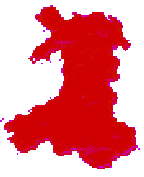
General pages about Wales, Welsh
History
and The History of Theosophy in
Wales
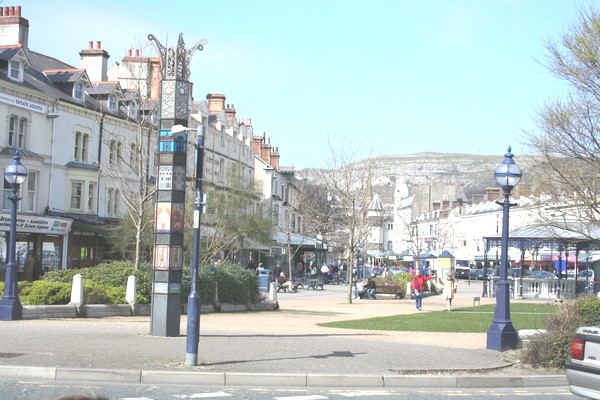
Wales is a
Principality within the United Kingdom
and has an eastern border
with England. The land
area is just over
8,000 square miles. Snowdon in
North Wales is
the highest mountain at 3,650 feet.
The coastline is
almost 750 miles long.
The population of
Wales as at the