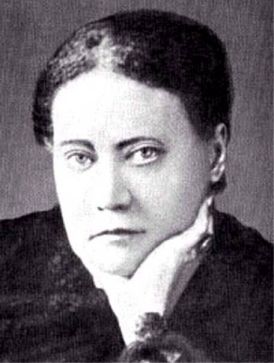
Helena
Petrovna Blavatsky
H P Blavatsky
Meets
William Quan Judge
1874
An account by W Q judge in which he relates
personal
experiences of H P Blavatsky’s unusual powers.
“My first acquaintance
with H. P. Blavatsky began in the winter of the year 1874. She was then living
in apartments in Irving Place, New York City,
“Very much was said on
the first evening that arrested my attention and enchained my imagination. I
found my secret thoughts read, my private affairs known to her. Unasked, and
certainly without any possibility of her having inquired about me, she referred
to several private and peculiar circumstances in
a way that showed at once that she had a perfect knowledge of
my family, my history, my surroundings, and my idiosyncrasies.
On that first evening I
brought with me a friend, a perfect stranger to her. He was a native of the
Sandwich Islands, who was studying law in New York, and who had formed all his
plans for a lifelong stay in that city. He was a young man, and had then no
intention of marrying. But she carelessly told him, before we left for home,
that before six months he would cross the continent of
“The next day I thought
I would try an experiment with Mme. Blavatsky. I took an ancient scarabaeus that she had never seen,
had it wrapped up and sent to her through the mails by a clerk in the
employment of a [Page 147] friend. My hand did not touch the package, nor did I
know where it was posted. But when I called on her at the end of the week the
second time, she greeted me with thanks for the scarabaeus.
I pretended ignorance. But she said it was useless to pretend, and then
informed me how I had sent it, and where the clerk had posted it.
During the time that
elapsed between my seeing her and the sending of the package no one had heard
from me a word about the matter.
“Very soon after I met
her, she moved to
“She remained in
“After she had
comfortably settled herself in
These sounds often
imitated either the piano or a gamut of sounds whistled by either myself or
some other person. While all this was going on, H. P. Blavatsky sat
unconcernedly reading or writing at
“It should be remarked
here that Madame. Blavatsky never exhibited either hysteria or the slightest
appearance of trance. She was always in the full possession of all her
faculties — and apparently of more than those of average people — whenever she
was producing any phenomena.
“In the month of
November or the beginning of December of the same winter, a photograph was
received from a correspondent at
size, laying it under a blotting-paper, placing her hand upon
it, and in a moment producing the copy demanded. Colonel Olcott took possession
of this picture, and laid it away in a book that he
was then reading, and which he took to bed with him. The next morning the
portrait had entirely faded out, and only the name, written in pencil, was
left. A week or two later, seeing this blank
card lying in Colonel Olcott's room, I
took it to Mme. Blavatsky, and requested her to cause the portrait to reappear.
Complying, she again laid the card under another sheet of paper, placed her
hand upon it, and presently the face of the man had come back as before; this
time indelibly imprinted.
“In the front room where
she wrote, there was a bookcase that stood for some time directly opposite her
writing-desk. Upon its top stood a stuffed owl, whose glassy, never - closing
eye frequently seemed to follow your movements. Indeed, I could relate
things a propos of that same defunct bird, but — in the words of Jacolliot — ' We have seen things such as one does not
relate for fear of making his readers doubt his sanity. . . . Still we have
seen them.'
Well, over the top of
the doors of the bookcase was a blank space, about three inches wide, and
running the breadth of the case. One evening we were sitting talking of magic
as usual, and of 'the Brothers', when Madame said, 'Look at the bookcase!'
“We looked up at once,
and as we did so, we could see appear, upon the blank space I have described,
several letters apparently in gold, that came out upon the surface of the wood.
They covered nearly all of the space. Examination showed that they were in
gold, and in a character that I had often seen upon
some of her papers.
This precipitation of
messages or sentences occurred very frequently, and I will relate one which
took place under my own hand and eyes, in such a way as to be unimpeachable for
me.
“I was one day, about
was not one word of writing upon it. As I began to read the
first paragraph I heard a bell sound in the air, and looking saw
that Mme. Blavatsky was intently regarding me.
“ 'What book do you read ? ' said she.
“Turning back to the
title-page, I was about to read aloud the name, when my eye was arrested by a
message written in ink across the top of the page which, a few minutes before,
I had looked at and found clear. It was a message in about seven lines, and the
fluid had not yet quite dried on the page — its contents were a warning about
the book. I am positive that when I took the volume in my hand, not one word
was written in it.
“On one occasion the
address of a business firm in
But H. P. B. said: '
Wait a moment, and perhaps we can get the address some other way.' She then
waved her hand, and instantly we heard a signal bell in the air over our heads.
We expected no less than that a heavy directory would rush at our heads from
the empty space, but no such thing took place. She sat down, took up a flat tin
paper-cutter japanned black on both sides and without having any painting on
it. Holding this in her left hand, she gently stroked it with her right, all
the while looking at us with an intense expression. After she had rubbed thus
for a few moments, faint outlines of letters began to show themselves upon the
black, shining surface, and presently the complete advertisement of the firm
whose address we desired was plainly imprinted upon the paper-cutter in gilt
letters, just as they had had it done on slips of blotting paper such as are
widely distributed as advertising media in America — a fact I afterwards found
out. On a close examination, we saw that the street and number, which were the
doubtful points in our memories, were precipitated with great brilliancy, the
other words and figures being rather dimmer. Mme. Blavatsky said that this was
because the mind of the operator was directed almost entirely to the street and
number, so that their reproduction was brought about with much greater
distinctness than the rest of the advertisement, which was, so to speak,
dragged in in a rather accidental way.
“About any object that
might be transported mysteriously around her room, or that came into it through
the air by supermundane means, there always lingered for
a greater or less space of time, a very peculiar though pleasant odour. It
was not always the same. At one time it was sandal-wood mixed
with what I thought was otto of roses; at another
time some unknown Eastern perfume, and again it came like the incense burnt in
temples.
“One day she asked me if
I would care to smell again the perfume. Upon my replying affirmatively, she
took my handkerchief in her hand, held it for a few moments, and when she gave
it back to me it was heavy with the well-known odour.
Then, in order to show
me that her hand was not covered with something that would come off upon the
handkerchief, she permitted me to examine both hands. They were without
perfume. But after I had convinced myself that there was no perfumery or
odoriferous objects concealed in her hands, I found from one hand beginning to
exhale one peculiar strong perfume, while from the other there rolled out
strong waves of the incense.
“On the table at which
I have often seen her
put small coins or a ring or amulet, and have put things in there myself,
closed the drawer, almost instantly reopening it, and nothing was visible. It
had disappeared from sight Clever conjurers have been known to produce such
illusions, but they always require some confederacy, or else they delude you
into believing that they had put the object in, when in reality they did not.
With H. P. B. there was no preparation. I repeatedly examined the cabinet, and
positively say that there was no means by which things could be dropped out of
sight or out of the drawer ; it stood on four small legs, elevated about two
inches above the desk, which was quite clear and unbroken underneath. Several
times I have seen her put a ring into one of the drawers and then leave the
room. I then looked in the drawer, saw the ring in it, and closed it again. She
then returned, and without coming near the cabinet showed me the same ring on
her finger. I then looked again in the drawer before she again came near it,
and the ring was gone.
“One day Mrs Elizabeth
Thompson, the philanthropist, who had a great regard for H. P. B., called to
see her. I was present. When about to leave, the visitor asked
Madame to lend her some object which she had worn, as a reminder and as a
talisman. The request being acceded to, the choice was left to the lady,
who
hesitated a moment;
Madame then said, ' Take this ring,' immediately drawing it off and handing it
to her friend, who placed it upon her finger, absorbed in admiring the stones.
But I was looking at H. P. B.'s fingers, and saw that
the ring was yet on her hand. Hardly believing my eyes, I looked at the other.
There was no mistake.
There were now two rings; but the lady did not observe this, and went off
satisfied she had the right one. In a few days she returned it to Madame, who
then told me that one of the rings was an illusion, leaving it to me to guess
which one. I could not decide, for she pushed the returned ring up
along her finger against the old one, and both merged into one.
“One evening several
persons were present after dinner, all, of course, talking about theosophy and
occultism. H. P. B. was sitting at her desk. While we were all engaged in
conversation somebody said that he heard music, and went out into the hall
where he thought it came from. While he was examining the hall, the person
sitting near the fireplace said that instead of being in the hall, the music,
which was that of a musical box, was playing up in the chimney. The gentleman
who had gone into the passage then returned and said that he had lost the
music, but at once was thoroughly amazed to find us all listening at the fireplace,
when he in turn heard the music plainly. Just as he began to listen, the music
floated out into the room, and very distinctly finished the tune in the air
over our heads. I have on various occasions heard this music in many ways, and
always when there was not any instrument to produce it.
“On this evening, a
little while after the music, Madame opened one of the drawers of the Chinese
cabinet and took from it an Oriental necklace of curious beads. This she gave
to a lady present. One of the gentlemen allowed to escape
him an expression of regret that he had not received such a testimonial.
Thereupon H. P. B.
reached over and grasped one of the beads of the necklace which the lady was
still holding in her hands, and the bead at once came off in Madame's hand. She
then passed it to the gentleman, who exclaimed that it was not merely a bead
but was now a breast-pin, as there was a gold pin fastened securely in it. The
necklace meanwhile remained intact, and its
recipient was examining it in wonder that one of its beads could have
been thus pulled off without breaking it.
“I have heard it said
that when H. P. B. was a young woman, after coming back to her family for the
first time in many years, everyone in her company was amazed and affrighted to
see material objects such as cups, books, her tobacco pouch and match-box, and
so forth, come flying through the air into her hand, merely when she gazed
intently at them. The stories of her early days can be readily credited by
those who saw similar things done at the New York headquarters.
Such aerial flights were
many times performed by objects at her command in my presence. One evening I
was in a hurry to copy a drawing I had made, and looked about on the table for
a paper-cutter with which to rub the back of the drawing so as to transfer the
surplus carbon to a clean sheet.
“As I searched, it was
suggested by someone that the round smooth back of a spoon bowl would be the
best means, and I arose to go to the kitchen at the end of the hall for a
spoon. But Mme. Blavatsky said, 'Stop, you need not go there; wait a moment.' I
stopped at the door, and she, sitting in her chair, held up her left hand. At
that instant a large table-spoon flew through the air across the room from out
of the opposite wall and into her hand. No one was there to throw it to her,
and the dining-room from which it had been transported was about thirty feet
distant; two brick walls separating it from the front room.
“In the next room — the
wall between being solid — there hung near the window a water-color portrait in
a frame with glass. I had just gone into that room and looked at the picture.
No one was in the room but myself, and no one went
there afterwards until I returned there. When I came into the place where H. P.
B. was sitting, and after I had been sitting down a few moments, she took up a
piece of paper and wrote upon it a few words, handing it over to me to put away
without looking at it. This I did. She then asked me to return to the other
room. I went there, and at once saw that the picture which, a few moments before,
I had looked at, had in some way been either moved or
broken. On
examining it I found that the glass was smashed, and that the
securely fastened back had been opened, allowing the picture within to fall to
the floor. Looking down I saw it lying there. Going back to the other room I
opened and read what
had been written on the slip of paper, it was :—
“ ' The picture of ------ in the dining-room has just been
opened; the glass is smashed and the painting is on the floor.'
“One day, while she was
talking with me, she suddenly stopped and said, 'So-and-so is now talking of me
to -----, and says, etc.' I made a note of the hour, and on the first
opportunity discovered that she had actually heard the person named saying just
what she told me had been said at the very time noted.
“My office was at least
three miles away from her rooms”: One day, at about
building, made to let light into the inner chambers. Suddenly I felt
on my hand a peculiar tingling sensation that always preceded any strange thing
to happen in the presence of H. P. B., and at that moment there fell from the
ceiling upon the edge of my desk, and from there to the floor, a
triangularly-folded note
from Madame to myself. It was written upon the clean back of a
printed Jain sutra or text. The message was in her handwriting, and was
addressed to me in her writing across the printed face.
“I remember one
phenomenon in connection with the making of a water-color drawing of an
Egyptian subject for her, which also illustrates what the Spiritualists call apport, or the bringing phenomenally of objects from some distant
place. I was in want of certain dry colors which she could not furnish me from
her collection, and as the drawing must be finished at that sitting, and there
was no shop nearby where I could purchase them, it seemed a dilemma until she
stepped towards the cottage piano, and, holding up the skirt of her robe de chambre with both hands, received into it seventeen bottles
of Winsor & Newton dry colors, among them those I
required. I still wanted some gold-paint, so she caused me to bring her a
saucer from the dining-room, and to give her the brass key of the door. She
rubbed the key upon the bottom of the saucer for a minute or two, and then,
returning them to me, I found a supply of the paint I required coating the
porcelain.”
I should hardly venture
to communicate the foregoing narrative to the public if it were not for the
obvious impossibility, in editing memoirs of Mme. Blavatsky, of keeping the
various experiences recorded of her within the limits of that which is
generally held to be credible. Certainly no one person of those who have had
opportunities of observing the phenomena occurring in her presence could hope
to be regarded by the world at large as both sane and truthful in relating his
experience. But fortified as each witness is in turn by the testimony of all
the others, the situation must be recognised as
involving difficulties for critics who contend that one and all, near
relations, old friends, casual acquaintances, or intimates of her later years,
are all possessed with a mania for trumping up fictitious stories about Mme.
Blavatsky, or all in different parts of the world, and at widely different
periods, sharing in an epidemic hallucination in regard to her, while in no
other respects exhibiting abnormal conditions of mind.
The first incident
during her stay in America which seems to have drawn the attention of the
newspapers to Mme. Blavatsky was the death and cremation, under the auspices of
the Theosophical Society, of an eccentric personage known in New York as “the
Baron de Palm”. Among other eccentricities that he committed, he made a will
shortly before his death professing to bequeath a considerable fortune to the
Theosophical Society, but on inquiry it turned out that the property referred
to in this document existed in his imagination alone.
The newspapers credited
the Society with having acquired great wealth by seducing the sympathies of
this guileless millionaire, when in reality his effects did not meet the cost
of the ceremonies connected with burning his body. However, the Society and
Mme. Blavatsky suddenly sprang into local notoriety.
“Fancy my surprise . .
.” she wrote about this time to her sister.
“I am — heaven help us ! — becoming fashionable, as it seems I am writing articles
on Esotericism and Nirvana, and paid for them more than I could have ever
expected, though I have hardly any time for writing for money. . . .
Believe me, and you
will, for you know me, I cannot make myself realize that I have ever been able
to write decently. ... If I were unknown, no publisher or editor would have
ever paid any attention to me. . . . It's all vanity and fashion. . . . Luckily
for the publishers, I have never been vain.”
In the course of another
family letter she writes: —
“Upon my word, I can
hardly understand why you and people generally should make such a fuss over my
writings, whether Russian or English! True, during the long years of my absence
from home, I have constantly studied and have learned certain things. But when
I wrote "/sis", I wrote it so easily that it was certainly no labor,
but a real pleasure. Why should I be praised for it?
Whenever I am told to
write, I sit down and obey, and then I can write easily upon almost anything —
metaphysics, psychology, philosophy, ancient religions, zoology, natural
sciences, or what not. I never put myself the
question: ' Can I write on this subject? . . .' or, ' Am I equal to the task ?' but I simply sit
down and write. Why ? Because somebody who knows all dictates to me. . . . My
MASTER, and occasionally others whom I knew in my travels years ago. . .
Please do not imagine
that I have lost my senses. I have hinted to you before now about them . . .
and I tell you candidly, that whenever I write upon a subject I know little or
nothing of, I address myself to Them, and one of Them inspires me, i.e. He
allows me to simply copy what I write from manuscripts, and even printed matter
that pass before my eyes, in the air, during which process I have never been
unconscious one single instant. ... It is that knowledge of His protection and
faith in His power that have enabled me to become mentally and spiritually so
strong . . . and even He (the Master) is not always required; for, during His
absence on some other occupation, He awakens in me His substitute in knowledge.
At such times it is no more / who write, but my inner Ego, my ' luminous self,'
who thinks and writes for me. Only see . . . you who know me. When was I ever so learned as to write such things? . . . Whence
all this knowledge? . . .”
On another occasion
again she wrote also to her sister: —
“You may disbelieve me,
but I tell you that in saying this I speak but the truth; I am solely occupied,
not with writing Isis, but with "Isis" herself. I live in a kind of
permanent enchantment, a life of visions and sights with open eyes, and no
trance whatever to deceive my senses! I sit and watch the fair goddess constantly.
And as she displays before me the secret meaning of her long lost secrets, and
the veil, becoming with every hour thinner and more transparent, gradually
falls off before my eyes, I hold my breath and can hardly trust to my senses! .
. .
For several years, in
order not to forget what I have learned elsewhere, I have been made to have
permanently before my eyes all that I need to see. Thus night and day, the
images of the past are ever marshaled before my inner eye. Slowly, and gliding
silently like images in an enchanted panorama, centuries after centuries appear
before me, . . . and I am made to connect these epochs with certain historical
events, and I know there can be no mistake. Races and nations, countries and
cities, emerge during some former century, then fade out and disappear during
some other one, the precise date of which I am then told by ... Hoary antiquity
gives room to historical periods; myths are explained by real events and
personages who have really existed ; and every important, and often unimportant
event, every revolution, a new leaf turned in the book of life of nations —
with its incipient course and subsequent natural results — remains photographed
in my mind as though impressed in indelible colours. . . .
When I think and watch
my thoughts, they appear to me as though they were like those little bits of
wood of various shapes and colors in the game known as the casse
tête: I pick them up one by one, and try to make them
fit each other, first taking one, then putting it aside, until I find its
match, and finally there always comes out in the end something geometrically
correct. ... I certainly refuse point-blank to attribute it to my own knowledge
or memory, for I could never arrive alone at either such premises or
conclusions. ... I tell you seriously I am helped. And He who helps me is my
GURU. . . .”
As belonging to the
period of Mme. Blavatsky's residence in America, mention may here be made of a
remarkable incident with which she was closely concerned, though it was not
accomplished by the exercise of her own abnormal powers.
Prince Emile
Wittgenstein, a Russian officer, and an old friend who had known her from
childhood, was in correspondence with her at the time of the formation of the Theosophical
Society. In consequence of certain warnings addressed to him
at spiritual seances concerning fatalities which
would menace him if he took
part in the war on the
devoted to spiritualism. This was as follows: —
“ TO THE EDITOR OF THE ' SPIRITUALIST'.
“Allow me, for the sake
of those who believe in spirit predictions, to tell you a story about incidents
which happened to me last year, and about which I, for months past, have wished
to talk to you, without, till now, finding time to do so. The narrative may
perhaps be a warning to some of the too credulous persons to whom every medial
message is a gospel, and who too often accept as true what are perhaps the lies
of some light spirit, or even the reflection of their own thoughts or wishes. I
believe that the fulfilment of a prediction is such
an exceptional thing that in general one ought to set no faith in such prophecies,
but should avoid them as much as possible, lest they have undue
influence upon our mind, faith, and free-will.
“A year and some months
ago, while getting ready to join our army on the Danube, I received first one
letter, and afterwards a few more, from a very kind friend of mine and a powerful
medium in America, beseeching me, in very anxious words, not to go to the war —
a spirit had predicted that the campaign
would be fatal to me, and having ordered my correspondent to
write to me the following words, ' Beware of the war saddle ! It will be your death, or worse still!'
“I confess that these
reiterated warnings were not agreeable, especially when received at the moment
of starting upon such a journey; but I forced myself to disbelieve them. My
cousin, the Baroness Adelina von Vay,
to whom I had written about the matter, encouraged me in doing so, and I
started.
“Now it seems that this
prediction became known also to some of my theosophical friends at
“The fact is, that during the whole campaign, I did not see one shot
explode near me, and that, so far as danger was concerned, I could just as well
have remained at Vevey. I was quite ashamed of
myself, and sought occasion now and then, to hear at least once the familiar
roar and whistle which, in my younger
years, were such usual music to me. All in vain I Whenever I was
near a scene of action, the enemy's fire ceased. I remember having once, during
the third bloody storming of Plevna, with my friend,
your Colonel Wellesley, stolen away from the Emperor's staff, in order to ride
down to a battery of ours which was exchanging a tremendous fire with the
redoubt of Grivitsa.
As soon as we, after
abandoning our horses further back in the brushwood, arrived at the battery,
the Turkish fire ceased as by enchantment, to begin again only when we left it
half-an-hour later, although our guns kept on blazing away at them
without interruption. I also tried twice to see some of the
bombarding of Guirgiewo, where all the windows were
broken, doors torn out, roofs broken down at the
Railway Station by the daily firing from Rustchuk. I
stopped there once a whole night, and another time half a day, always in the
hope of seeing
something. As long as I was there, the scene was quiet as in the
times of peace, and the firing recommenced as soon as I had left the place.
Some days after my last visit to Guirgiewo, Colonel
Wellesley passed it, and had part of his luggage destroyed by a shell, which,
breaking through the roof into the gallery, tore to pieces two soldiers who
were standing near.
"I cannot believe
all this to be the sole result of chance. It was too regular, too positive to
be explained thus. It is, I am sure of it, magic — the more so as the person
who protected me thus efficaciously is one of the most powerful masters of the
occult science professed by the theosophists. I can relate, by way of contrast,
the following fact, which happened during the war on the Danube, in 1854, at
the siege of Silistria. A very distinguished Engineer
General of ours, who led our approaches, was a faithful spiritualist, and
believed every word which he wrote down by the help of a psychograph as a
genuine revelation from superior spirits. Now these spirits had predicted to
him that he would return from the war unhurt, and covered with fame and glory.
The result of this was
that he exposed himself openly, madly, to the enemy's fire, till at last a shot
tore off his leg, and he died some weeks later. This is the faith we ought to
have in predictions, and I hope my narrative may be welcome to you, as a
warning to many.—
Truly yours,
“(PRINCE) E. WITTGENSTEIN
(F.T.S.).
“VEVEY, SWITZERLAND, ”
18th June 1878.”
Apart from the intrinsic
interest of this narrative it is important as showing definitely — what indeed
is notorious for all who knew Mme. Blavatsky at the period to which it refers —
that she had already, while the Theosophical Society was still in its infancy
in New York, declared the existence of “the Brothers”,
whom she has been so absurdly accused by her recent critics of
inventing at a far later date.
Find out more about
Theosophy
with these links
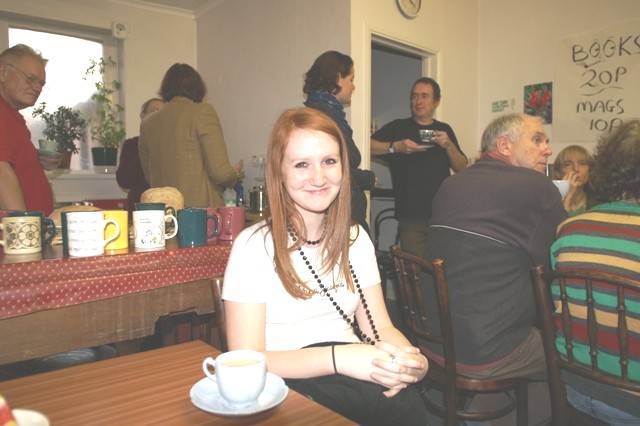
Cardiff Theosophical Society meetings
are informal
and there’s always a cup of tea afterwards
The
Cardiff Theosophical Society Website
The National Wales Theosophy
Website
Theosophy
Cardiff’s Instant Guide to Theosophy
Theosophy
Cardiff’s Gallery of Great Theosophists
Dave’s Streetwise
Theosophy Boards
The Theosophy Website that
welcomes
If you run a Theosophy Study
Group, please
feel free to use any material on
this Website
Independent Theosophy Blog
The Most Basic Theosophy
Website in the Universe
A quick overview of
Theosophy
and the Theosophical Society
If you run a Theosophy Study
Group you
can use this as an introductory
handout.
One liners and quick explanations
About aspects of Theosophy
The
Voice of the Silence Website
An Independent
Theosophical Republic
Links to Free Online
Theosophy
Study Resources; Courses, Writings,
The main criteria for the
inclusion of
links on this site is that they
have some
relationship (however tenuous) to
Theosophy
and are lightweight, amusing or
entertaining.
Topics include Quantum Theory
and Socks,
Dick
Dastardly and Legendary Blues Singers.
An entertaining
introduction to Theosophy
For
everyone everywhere, not just in Wales
It’s all “water under the
bridge” but everything you do
makes an imprint on the Space-Time
Continuum.
A selection of articles on
Reincarnation
Provided in response to the
large number
of enquiries we receive on this subject
No
Aardvarks were harmed in the
National Wales Centre for Theosophy
Blavatsky Wales Theosophy Group
The
Spiritual Home of Urban Theosophy
The
Earth Base for Evolutionary Theosophy
The
Birmingham Annie Besant Lodge
_______________________
Tekels Park
to be Sold to a Developer
Concerns about the fate of the wildlife as
Tekels Park is to be Sold to a Developer
Concerns are raised about the fate of the wildlife as
The Spiritual Retreat, Tekels Park in Camberley,
Surrey, England is to be sold to a developer.
Tekels Park is a 50 acre woodland park, purchased
for the Adyar Theosophical Society in England in 1929.
In addition to concern about the park, many are
worried about the future of the Tekels Park Deer
as they are not a protected
species.
Anyone planning a “Spiritual” stay at the
Tekels Park Guest House should be aware of the sale.
Tekels Park & the Loch Ness Monster
A Satirical view of the sale
of Tekels Park
in Camberley, Surrey to a
developer
The Toff’s Guide to the Sale of
Tekels Park
What the men in top hats have
to
say about the sale of Tekels Park
____________________
The Theosophy
The Theosophy
Cardiff Guide to
The Theosophy Cardiff
Guide to
The
Theosophy Cardiff Guide to
The
Terraced Maze of Glastonbury Tor
Glastonbury and Joseph of Arimathea
The
Grave of King Arthur & Guinevere
Views
of Glastonbury High Street
The
Theosophy Cardiff Guide to
_____________________
A B C D EFG H IJ KL M N OP QR S T UV WXYZ
Complete
Theosophical Glossary in Plain Text Format
1.22MB
___________________________
Classic Introductory
Theosophy Text
A Text Book of Theosophy By C
What Theosophy Is From the Absolute to Man
The Formation of a Solar System The Evolution of Life
The Constitution of Man After Death Reincarnation
The Purpose of Life The Planetary Chains
The Result of Theosophical Study
_____________________
Preface to the American Edition Introduction
Occultism and its Adepts The Theosophical Society
First Occult Experiences Teachings of Occult Philosophy
Later Occult Phenomena Appendix
Try these if you are
looking for a
local
Theosophy Group or Centre
UK Listing of
Theosophical Groups
Pages About

General pages about Wales,
Welsh History
and The History of Theosophy in
Wales
Wales is a
Principality within the United Kingdom
and has an eastern
border with England. The land
area is just over 8,000
square miles. Snowdon in
North Wales is
the highest mountain at 3,650 feet.
The coastline is
almost 750 miles long.
The population of
Wales as at the