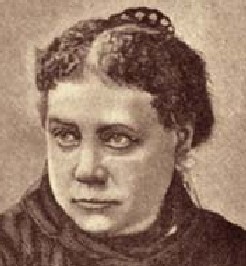
H
P Blavatsky
How a "Chela"
Found his "Guru"
By
S. Ramaswamier
[Being Extracts from a
private letter to Damodar K. Mavalankar, Joint Recording Secretary of the
Theosophical Society.]
....When we met last at
I applied for leave on
medical certificate and it was duly granted.
One day in September last, while I was reading in my room, I was ordered
by the audible voice of my blessed Guru, M---Maharsi, to leave all and proceed
immediately to
Without losing a moment,
I closed up all my affairs and left the
station. For the tones of that voice are to me the
divinest sound in Nature, its commands imperative. I traveled in my ascetic robes. Arrived at
Bombay, I found Madame Blavatsky gone, and learned through you that she had
left a few days before; that she was very
ill; and that, beyond the fact that she
had left the place very suddenly with a Chela, you knew nothing of her
whereabouts. And now, I must tell you
what happened to me after I had left you.
Really not knowing
whither I had best go, I took a through ticket to
They knew, they said,
she was going to
would not be allowed to
follow her .... Brother Nobin K. Bannerji, the President of the Adhi Bhoutic
Bhratru Theosophical Society, would not tell me where Madame Blavatsky was, or
perhaps did not then know himself. Yet he and others had risked all in the hope
of seeing the Mahatmas. On the 23rd, at
last he brought me from
in five minutes. A tall, dark-looking hairy Chela (not Chunder
Cusho), but a Tibetan I suppose by his dress, whom I met after I had crossed
the river Hugli with her in a boat, told me that I had come too late, that
Madame Blavatsky had already seen the Mahatmas and that he had brought her
back. He would not listen to my supplications
to take me with him, saying he had no other orders than what he had already
executed--namely,
to take her about
twenty-five miles beyond a certain place he named to me, and that he was now
going to see her safe to the station and return.
The Bengali brother
Theosophists had also traced and followed her, arriving at the station half an
hour later. They crossed the river from
Chandernagore to a small railway station on the opposite side. When the train arrived, she got into the
carriage, upon entering which I found the Chela! And, before even her own things could be
placed in the van, the train, against all regulations and before the bell was
rung, started off, leaving the Bengali gentlemen and her servant behind, only
one of them and the wife and daughter of another--all Theosophists and
candidates for Chelaship--having had time to get in. I myself had
barely the time to jump
into the last carriage. All her things, with the exception of her box
containing Theosophical correspondence, were left behind with her servant. Yet,
even the persons that went by the same train with her did not reach
Darjiling. Babu Nobin Banerjee, with the
servant, arrived five days later; and
those who had time to take their
seats, were left five or
six stations behind, owing to another unforeseen accident (?), reaching
Darjiling also a few days later.
It required no great
stretch of imagination to conclude that Madame Blavatsky was, perhaps, being
again taken to the Mahatmas, who, for some good reasons best known to them, did
not want us to be following and watching her.
Two of the Mahatmas, I had learned for a certainty, were in the
neighbourhood of British territory; and
one of them was seen and recognized, by a person I need not name here, as a
high Chutukla of
The first days of her
arrival Madame Blavatsky was living at the house of a Bengali gentleman, a
Theosophist, refusing to see any one, and preparing, as I thought, to go again
somewhere on the borders of Tibet.
To all our importunities
we could get only this answer from her:
that we had no business to stick to and follow her, that she did not
want us, and that she had no right to disturb the Mahatmas with all sorts of
questions that concerned only the questioners, for they knew their own business
best. In despair, I determined, come
what might, to cross the
frontier, which is about
a dozen miles from here, and find the Mahatmas or--DIE. I never stopped to think that what I was
going to undertake would be regarded as the rash act of a lunatic. I had no permission, no "pass" from
the Sikkhim Rajah, and was yet decided to penetrate into the heart of a
semi-independent State where, if anything happened, the
Anglo-Indian officials
would not--if even they could--protect me, since I should have crossed over
without their permission. But I never
even gave that a thought, but was bent upon one engrossing idea--to find and
see my Guru. Without breathing a word of
my intentions to any one, one morning, namely, October 5, I set out in search
of the Mahatma.
I had an umbrella and a
pilgrim's staff for sole weapons, with a few rupees in my purse. I wore the yellow garb and cap. Whenever I was tired on the road, my costume
easily procured for me for a small sum a pony to ride.
The same afternoon I
reached the banks of the
ferry-boat, and this
even not without much danger and difficulty.
That whole afternoon I traveled on foot, penetrating further and further
into the heart of Sikkhim, along a narrow footpath. I cannot now say how many miles I traveled
before dusk, but I am sure it was not less than twenty or twenty-five
miles. Throughout, I saw nothing but
impenetrable jungles and forests on all sides of me, relieved at very long
intervals by solitary huts belonging to the mountain population. At dusk I
began to search around me for a place to rest in at night.
I met on the road, in
the afternoon, a leopard and a wild cat;
and I am astonished now to
think how I should have
felt no fear then nor tried to run away. Throughout, some secret influence
supported me. Fear or anxiety never once
entered my mind. Perhaps in my heart
there was room for no other feeling but an intense anxiety to find my
Guru. When it was just getting dark, I
espied a solitary hut a few yards from the roadside. To it I directed my steps in the hope of
finding a lodging. The rude door was
locked. The cabin was untenanted at the
time. I examined it on all sides and
found an aperture on the western side.
It was small indeed, but sufficient for me to jump through. It had a small shutter and a wooden
bolt. By a strange coincidence of
circumstances the hillman had forgotten to fasten it on the inside when he
locked the door. Of course, after what
has subsequently transpired, I now, through the eye of faith, see the
protecting hand of my Guru everywhere around me. Upon getting inside I found the room
communicated, by a small doorway, with
another apartment, the
two occupying the whole space of this sylvan mansion. I laid down, concentrating every thought upon
my Guru as usual, and soon fell into a profound sleep.
Before I went to rest, I
had secured the door of the other room and the single window. It may have been between ten and eleven, or
perhaps a little later, that I awoke and heard sounds of footsteps in the
adjoining room. I could plainly
distinguish two or three people talking together in a dialect unknown to me.
Now, I cannot recall the same without a shudder. At any moment they might have entered from
the other room and murdered me for my money.
Had they mistaken me for a burglar the same fate awaited me.
These and similar
thoughts crowded into my brain in an inconceivably short period. But my heart did not palpitate with fear, nor
did I for one moment think of the possibly tragical chances of the moment. I know not what secret influence held me
fast, but nothing could put me out or make me fear; I was perfectly calm. Although I lay awake staring into
the darkness for upwards
of two hours, and even paced the room softly and slowly without making any
noise, to see if I could make my escape, in case of need, back to the forest by
the same way I had effected my entrance into the hut--no fear, I repeat, or any
such feeling ever entered my heart. I
recomposed myself to rest. After a sound sleep, undisturbed by any dream, I
awoke at daybreak. Then I hastily put on
my boots, and cautiously got out of the hut through the same window. I could hear the snoring of the owners of the
hut in the other room. But I lost no
time, and gained the path to Sikkhim (the city) and held on my
way with unflagging
zeal. From the inmost recesses of my
heart I thanked my revered Guru for the protection he had vouchsafed me during
the night. What prevented the owners of the
hut from penetrating to the second room?
What kept me in the same serene and calm spirit, as if I were in a room
of my own house? What could possibly
make me sleep so soundly under such circumstances,--enormous, dark forests on
all sides abounding in wild beasts, and a party of cut-throats--as most of the
Sikkhimese are said to be--in the next room, with an easy and rude door between
them and me?
When it became quite
light, I wended my way on through hills and dales. Riding or walking, the
journey was not a pleasant one for any man not as deeply engrossed in thought
as I was then myself, and quite oblivious to anything affecting the body. I have cultivated the power of mental
concentration to such a degree of late that, on many an occasion, I have been
able to make myself quite unconscious of anything around me when my mind was
wholly bent upon the one object of my life, as several of my friends will
testify; but never to such an extent as
in this instance.
It was, I think, between
eight and nine A.M. I was following the
road to the town of
he was some military
officer of the Sikkhim Rajah. Now, I
thought, I am caught! He will ask me for
my pass and what business I have in the independent
I had never lost sight
of for one moment during the interval.
The very same instant saw me prostrated on the ground at his feet. I arose at his command, and, leisurely
looking into his face, forgot myself entirely in the contemplation of the image
I knew so well, having seen
his portrait (the one in
Colonel Olcott's possession) times out of number. I knew not what to say: joy and reverence tied my tongue.
The majesty of his
countenance, which seemed to me to be the impersonation of power and thought,
held me rapt in awe. I was at last face to face with "the Mahatma of the
Himavat," and he was no myth, no "creation of the imagination of a
medium," as some sceptics had suggested.
It was no dream of the night; it
was between nine and
to fail signally, as for
example---and---. Some, instead of being
accepted and pledged this year, were now thrown off for a year. The Mahatma, I found, speaks very little
English--or at least it so seemed to me--and spoke to me in my
mother-tongue--Tamil. He told me that if
the Chohan permitted Madame Blavatsky to visit Parijong next year, then I could
come with her. The Bengali Theosophists
who followed the "Upasika" (Madame Blavatsky) would see that she was
right in trying to dissuade them from following her now. I asked the blessed Mahatma whether I could
tell what I saw and heard to others. He
replied in the
affirmative, and that
moreover I would do well to write to you and describe all.
I must impress upon your
mind the whole situation, and ask you to keep well in view that what I saw was
not the mere "appearance" only, the astral body of the Mahatma, as we
saw him at
just quitted, and then I
slowly retraced my steps. Now it was
that I found for the first time that my long boots had pinched my leg in
several places, that I had eaten nothing since the day before, and that
I was too weak to walk
further. My whole body was aching in
every limb. At a little distance I saw petty traders with country ponies,
carrying burdens. I hired one of these
animals. In the afternoon I came to the
When I entered the house
I found with Madame Blavatsky, Bahu Parbati Churn Roy, Deputy Collector of
Settlements and Superintendent of Dearah Survey, and his assistant, Babu Kanty
Bhushan Sen, both members of our Society.
At their prayer and Madame Blavatsky's command, I recounted all that had
happened to me, reserving of course my private conversation with the
Mahatma. They were all, to say the
least, astounded. After all, she will
not go this year to
And now that I have seen
the Mahatma in the flesh, and heard his livingvoice, let no one dare say to me
that the Brothers do not exist. Come now
whatever will, death has no fear for me, nor the vengeance of enemies; for what I know, I know!
--S. Ramaswamier, F.T.S.
Find out more about
Theosophy
with these links
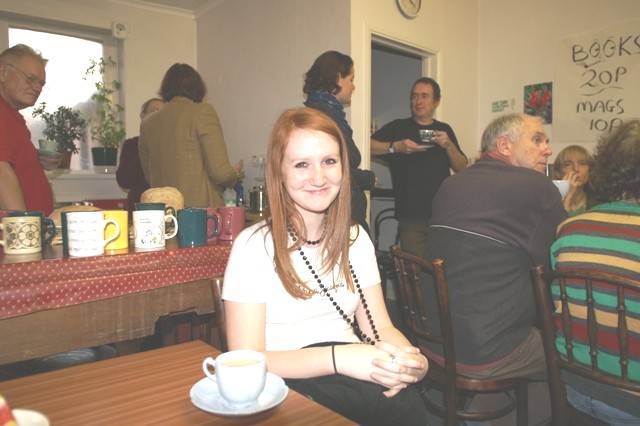
Cardiff Theosophical Society meetings
are informal
and there’s always a cup of tea afterwards
The Cardiff Theosophical Society Website
The National Wales Theosophy
Website
Theosophy
Cardiff’s Instant Guide to Theosophy
Theosophy
Cardiff’s Gallery of Great Theosophists
Dave’s Streetwise
Theosophy Boards
The Theosophy Website that
welcomes
If you run a Theosophy Study
Group, please
feel free to use any material
on this Website
Independent Theosophy Blog
The Most Basic Theosophy
Website in the Universe
A quick overview of
Theosophy
and the Theosophical Society
If you run a Theosophy Study
Group you
can use this as an introductory handout.
One liners and quick explanations
About aspects of Theosophy
The Voice of the Silence Website
An Independent
Theosophical Republic
Links to Free Online
Theosophy
Study Resources; Courses, Writings,
The main criteria for the
inclusion of
links on this site is that
they have some
relationship (however tenuous)
to Theosophy
and are lightweight, amusing
or entertaining.
Topics include Quantum Theory
and Socks,
Dick Dastardly and Legendary Blues Singers.
An entertaining introduction to Theosophy
For everyone everywhere, not just in Wales
It’s all “water under the
bridge” but everything you do
makes an imprint on the
Space-Time Continuum.
A selection of articles on
Reincarnation
Provided in response to the
large number
of enquiries we receive on
this subject
No
Aardvarks were harmed in the
National Wales Centre for Theosophy
Blavatsky Wales Theosophy Group
The
Spiritual Home of Urban Theosophy
The Earth Base for Evolutionary Theosophy
The Birmingham Annie Besant Lodge
_______________________
Tekels Park
to be Sold to a Developer
Concerns about the fate of the wildlife as
Tekels Park is to be Sold to a Developer
Concerns are raised about the fate of the wildlife as
The Spiritual Retreat, Tekels Park in Camberley,
Surrey, England is to be sold to a developer.
Tekels Park is a 50 acre woodland park, purchased
for the Adyar
Theosophical Society in England in 1929.
In addition to concern about the park, many are
worried about
the future of the Tekels Park Deer
as they are not a protected species.
Anyone planning a “Spiritual” stay at the
Tekels Park Guest House should be aware of the sale.
Tekels Park & the Loch Ness Monster
A Satirical view of the sale
of Tekels Park
in Camberley, Surrey to a
developer
The Toff’s Guide to the Sale of Tekels Park
What the men in top hats have
to
say about the sale of Tekels
Park
____________________
The Theosophy
The Theosophy
Cardiff Guide to
The Theosophy Cardiff
Guide to
The
Theosophy Cardiff Guide to
The Terraced Maze of Glastonbury Tor
Glastonbury and Joseph of Arimathea
The
Grave of King Arthur & Guinevere
Views
of Glastonbury High Street
The
Theosophy Cardiff Guide to
_____________________
A B C D EFG H IJ KL M N OP QR S T UV WXYZ
Complete
Theosophical Glossary in Plain Text Format
1.22MB
___________________________
Classic Introductory
Theosophy Text
A Text Book of Theosophy By
C
What Theosophy Is From the Absolute to Man
The Formation of a Solar System The Evolution of Life
The Constitution of Man After Death Reincarnation
The Purpose of Life The Planetary Chains
The Result of Theosophical Study
_____________________
Preface to the American Edition Introduction
Occultism and its Adepts The Theosophical Society
First Occult Experiences Teachings of Occult Philosophy
Later Occult Phenomena Appendix
Try these if you are
looking for a
local Theosophy Group or
Centre
UK Listing of
Theosophical Groups
Pages About

General pages about Wales,
Welsh History
and The History of Theosophy
in Wales
Wales is a
Principality within the United Kingdom
and has an
eastern border with England. The land
area is just over
8,000 square miles. Snowdon in
North Wales is
the highest mountain at 3,650 feet.
The coastline is
almost 750 miles long.
The population of
Wales as at the