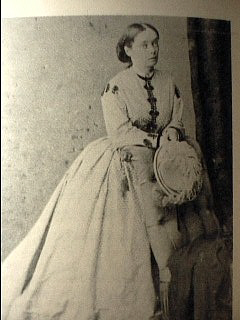
H
P Blavatsky
Mahatmas and Chelas
Anonymous Article
A Mahatma is an
individual who, by special training and education, has evolved those higher
faculties, and has attained that spiritual knowledge, which ordinary humanity
will acquire after passing through
numberless series of
re-incarnations during the process of cosmic evolution, provided, of course,
that they do not go, in the meanwhile, against the purposes of Nature and thus
bring on their own annihilation.
This process of the
self-evolution of the MAHATMA extends over a number of
"incarnations," although, comparatively speaking, they are very few.
Now, what is it that incarnates? The
occult doctrine, so far as it is given out, shows that the first three principles
die more or less with what is called the physical death. The fourth principle, together with the lower
portions of the fifth, in which reside the animal propensities, has Kama Loka
for its abode, where it suffers the throes of disintegration in proportion to
the intensity of those lower desires; while it is the higher Manas, the pure
man, which is associated with the sixth and seventh principles, that goes into
Devachan to enjoy there the effects of its good Karma, and then to be
reincarnated as a higher personality.
Now an entity that is
passing through the occult training in its successive births, gradually has
less and less (in each incarnation) of that lower Manas until there arrives a
time when its whole Manas, being of an entirely elevated character, is centred in the individuality, when such a person may be
said to have become a MAHATMA.
At the time of his
physical death, all the lower four principles perish without any suffering, for
these are, in fact, to him like a piece of wearing apparel which he puts on and
off at will. The real MAHATMA is then
not his physical body but that higher Manas which is inseparably linked to the
Atma and its vehicle (the sixth principle)--a union effected by him in a
comparatively very short period by passing through the process of
self-evolution laid down by Occult Philosophy.
When
therefore, people express a desire to "see a MAHATMA," they
really do not seem to understand what it is they ask for. How can they, with their physical eyes, hope
to see that which transcends that sight?
Is it the body--a mere shell or mask--they crave or hunt after? And supposing they see the body of a MAHATMA,
how can they know that behind that mask is concealed an exalted entity? By what standard are they to judge whether
the Maya before them reflects the image of a true MAHATMA or not? And who will say that the physical is not a
Maya?
Higher things can be
perceived only by a sense pertaining to those higher things; whoever therefore
wants to see the real MAHATMA, must use his
intellectual sight. He must so elevate
his Manas that its perception will be clear and all mists created by Maya be
dispelled. His vision will then be
bright and he will see the MAHATMA wherever he may be, for, being merged into
the sixth and the seventh principles, which know no distance, the MAHATMA may
be said to be everywhere. But, at the
same time, just as we may be standing on a mountain top and have within our
sight the whole plain, and yet not be cognizant of any particular tree or spot,
because from that elevated position all below is nearly
identical, and as our
attention may be drawn to something which may be dissimilar to its
surroundings--in the same manner, although the whole of humanity is within the
mental vision of the MAHATMA, he cannot be expected to take special note of
every human being, unless that being by
his special acts draws particular attention to himself. The highest interest of humanity, as a whole,
is the MAHATMA's special concern, for he has
identified himself with that Universal Soul which runs through Humanity; and to draw his
attention one must do so through that Soul.
This perception of the
Manas may be called "faith" which should not be confounded with blind
belief. "Blind faith" is an
expression sometimes used to indicate belief without perception or
understanding; while
the true perception of the Manas is that enlightened belief which is the real
meaning of the word "faith."
This belief should at the same time be accompanied by knowledge, i.e.,
experience, for "true knowledge brings with it faith." Faith is the perception of the Manas (the
fifth principle), while knowledge, in the true sense of the term, is the capacity
of the Intellect, i.e., it is spiritual perception.
In short, the
individuality of man, composed of his higher Manas, the sixth and the seventh
principle, should work as a unity, and then only can it obtain "divine
wisdom," for divine things can be sensed only by divine faculties. Thus a chela should
be actuated solely by a desire to understand the operations of the Law of
Cosmic Evolution, so as to be able to work in conscious and harmonious accord
with Nature.
--Anon.
Find out more about
Theosophy
with these links
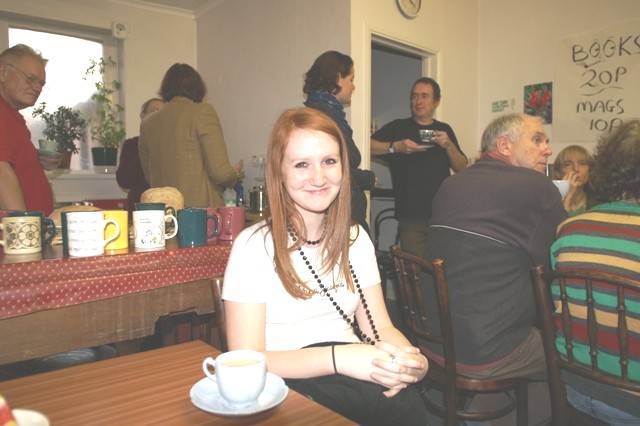
Cardiff Theosophical Society meetings
are informal
and there’s always a cup of tea afterwards
The Cardiff Theosophical Society Website
The National Wales Theosophy
Website
Theosophy
Cardiff’s Instant Guide to Theosophy
Theosophy
Cardiff’s Gallery of Great Theosophists
Dave’s Streetwise
Theosophy Boards
The Theosophy Website that
welcomes
If you run a Theosophy Study
Group, please
feel free to use any material on
this Website
Independent Theosophy Blog
The Most Basic Theosophy
Website in the Universe
A quick overview of
Theosophy
and the Theosophical Society
If you run a Theosophy Study
Group you
can use this as an introductory handout.
One liners and quick explanations
About aspects of Theosophy
The Voice of the Silence Website
An Independent
Theosophical Republic
Links to Free Online
Theosophy
Study Resources; Courses, Writings,
The main criteria for the
inclusion of
links on this site is that they
have some
relationship (however tenuous) to
Theosophy
and are lightweight, amusing or
entertaining.
Topics include Quantum Theory
and Socks,
Dick Dastardly and Legendary Blues Singers.
An entertaining introduction to Theosophy
For everyone everywhere, not just in Wales
It’s all “water under the
bridge” but everything you do
makes an imprint on the Space-Time
Continuum.
A selection of articles on
Reincarnation
Provided in response to the
large number
of enquiries we receive on this
subject
No
Aardvarks were harmed in the
National Wales Centre for Theosophy
Blavatsky Wales Theosophy Group
The
Spiritual Home of Urban Theosophy
The Earth Base for Evolutionary Theosophy
The Birmingham Annie Besant Lodge
_______________________
Tekels Park
to be Sold to a Developer
Concerns about the fate of the wildlife as
Tekels Park is to be Sold to a Developer
Concerns are raised about the fate of the wildlife as
The Spiritual Retreat, Tekels Park in Camberley,
Surrey, England is to be sold to a developer.
Tekels Park is a 50 acre woodland park, purchased
for the Adyar Theosophical Society in England in 1929.
In addition to concern about the park, many are
worried about the future of the Tekels Park Deer
as they are not a protected species.
Anyone planning a “Spiritual” stay at the
Tekels Park Guest House should be aware of the sale.
Tekels Park & the Loch Ness Monster
A Satirical view of the sale
of Tekels Park
in Camberley, Surrey to a
developer
The Toff’s Guide to the Sale of
Tekels Park
What the men in top hats have
to
say about the sale of Tekels Park
____________________
The Theosophy
The Theosophy
Cardiff Guide to
The Theosophy Cardiff
Guide to
The
Theosophy Cardiff Guide to
The Terraced Maze of Glastonbury Tor
Glastonbury and Joseph of Arimathea
The
Grave of King Arthur & Guinevere
Views
of Glastonbury High Street
The
Theosophy Cardiff Guide to
_____________________
A B C D EFG H IJ KL M N OP QR S T UV WXYZ
Complete
Theosophical Glossary in Plain Text Format
1.22MB
___________________________
Classic Introductory
Theosophy Text
A Text Book of Theosophy By C
What Theosophy Is From the Absolute to Man
The Formation of a Solar System The Evolution of Life
The Constitution of Man After Death Reincarnation
The Purpose of Life The Planetary Chains
The Result of Theosophical Study
_____________________
Preface to the American Edition Introduction
Occultism and its Adepts The Theosophical Society
First Occult Experiences Teachings of Occult Philosophy
Later Occult Phenomena Appendix
Try these if you are
looking for a
local
Theosophy Group or Centre
UK Listing of
Theosophical Groups
Pages About
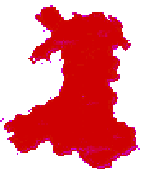
General pages about Wales,
Welsh History
and The History of Theosophy in
Wales
Wales is a
Principality within the United Kingdom
and has an eastern
border with England. The land
area is just over 8,000
square miles. Snowdon in
North Wales is
the highest mountain at 3,650 feet.
The coastline is
almost 750 miles long.
The population of
Wales as at the