NIGHTMARE
TALES
A
Compilation of Stories
By
H P Blavatsky
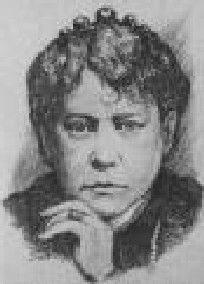
H
P Blavatsky
Return to Nightmare Tales index
The Cave of the Echoes
A Strange
but True Story*
By
H P Blavatsky
* This story is given from the narrative of an
eye-witness, a Russian gentleman, very pious,
and
fully trustworthy. moreover, the facts are copied
from the police records of P---.
The eye-witness in question attributes it, of
course, partly
to
divine interference and partly to the Evil One. -- H. P. B.
In one of the distant
governments of the Russian empire, in a small town on the borders of
It was known that the
proprietor, Mr. Izvertzoff, had adopted his brother's
children, and, having formed an especial attachment for his eldest nephew,
Nicolas, he made him the sole heir of his numerous estates. Time rolled on. The
uncle was getting old, the nephew was coming of age.
Days and years had passed in monotonous serenity, when, on the hitherto clear
horizon of the quiet family, appeared a cloud. On an unlucky day one of the
nieces took it into her head to study the zither. The instrument being of
purely Teutonic origin, and no teacher of it residing in the neighbourhood, the indulgent uncle sent to
From that day the little
cloud began growing rapidly; for every vibration of the melodious instrument
found a responsive echo in the old bachelor's heart. Music awakens love, they
say, and the work begun by the zither was completed by Munchen's
blue eyes. At the expiration of six months the niece had become an expert
zither player, and the uncle was desperately in love.
One morning, gathering
his adopted family around him, he embraced them all very tenderly, promised to
remember them in his will, and wound up by declaring his unalterable resolution
to marry the blue-eyed Munchen. After this he fell
upon their necks, and wept in silent rapture. The family,
understanding that they were cheated out of the inheritance, also wept; but it
was for another cause.
Having thus wept, they
consoled themselves and tried to rejoice, for the old gentleman was sincerely
beloved by all. Not all of them rejoiced, though. Nicolas, who had himself been
smitten to the heart by the pretty German, and who found himself defrauded at
once of his belle and of his uncle's money, neither rejoiced nor consoled himself,
but disappeared for a whole day.
Meanwhile, Mr. Izvertzoff had given orders to prepare his traveling
carriage on the following day, and it was whispered that he was going to the
chief town of the district, at some distance from his home, with the intention
of altering his will. Though very wealthy, he had no superintendent on his
estate, but kept his books himself. The same evening after supper, he was heard
in his room, angrily scolding his servant, who had been in his service for over
thirty years. This man, Ivan, was a native of northern
On the vast domain of
Mr. Izvertzoff there was a curious cavern, which
excited the curiosity of all who visited it. It exists to this day, and is well
known to every inhabitant of P---. A pine forest, commencing
a few feet from the garden gate, climbs in steep terraces up a long range of
rocky hills, which it covers with a broad belt of impenetrable vegetation.
The grotto leading into the cavern, which is known as the "Cave of the
Echoes," is situated about half a mile from the site of the mansion, from
which it appears as a small excavation
in the hillside, almost hidden by luxuriant plants, but not so
completely as to prevent any person entering it from being readily seen from
the terrace in front of the house. Entering the grotto, the explorer finds at
the rear a narrow cleft; having passed through which he emerges into a lofty
cavern, feebly lighted through fissures in the vaulted roof, fifty feet from
the ground. The cavern itself is immense, and would easily hold between two and
three thousand people. A part of it, in the days of Mr. Izvertzoff,
was paved with flagstones, and was often used in the summer as a ball-room by
picnic parties. Of an
irregular oval, it
gradually narrows into a broad corridor, which runs for several miles
underground, opening here and there into other chambers, as large and lofty as
the ball-room, but, unlike this, impassable otherwise than in a boat, as they
are always full of water. These natural basins have the reputation of being
unfathomable.
On the margin of the
first of these is a small platform, with several mossy rustic seats arranged on
it, and it is from this spot that the phenomenal echoes, which give the cavern
its name, are heard in all their weirdness. A word pronounced in a whisper, or
even a sigh, is caught up by endless mocking voices, and instead of diminishing
in volume, as honest echoes do, the sound grows louder and louder at every
successive repetition, until at last it bursts forth like the repercussion of a
pistol shot, and recedes in a plaintive wail down the
corridor.
On the day in question,
Mr. Izvertzoff had mentioned his intention of having
a dancing party in this cave on his wedding day, which he had fixed for an
early date. On the following morning, while preparing for his drive, he was
seen by his family entering the grotto, accompanied only by his Siberian
servant. Half-an-hour later, Ivan returned to the mansion for a snuff-box which
his master had forgotten in his room, and went back with it to the cave. An
hour later the whole house was startled by his loud cries. Pale and dripping
with
water, Ivan rushed in like a madman, and declared that Mr. Izvertzoff was nowhere to be found in the cave. Thinking he
had fallen into the lake, he had dived into the first basin in search of him
and was nearly drowned himself. The day passed in vain attempts to find the
body. The police filled the house, and louder than the rest in his despair was
Nicolas, the nephew, who had returned home only to meet the sad tidings.
A dark suspicion fell
upon Ivan, the Siberian. He had been struck by his master the night before, and
had been heard to swear revenge. He had accompanied him alone to the cave, and
when his room was searched a box full of rich family jewellery,
known to have been carefully kept in Mr. Izvertzoff's
apartment, was found under Ivan's bedding. Vainly did the serf call God to
witness that the box had been given to him in charge by his master himself,
just before they proceeded to the cave; that it was the latter's purpose to
have the jewellery reset, as he intended it for a
wedding present to his bride; and that he, Ivan,
would willingly give his own life to recall that of his master,
if he knew him to be dead. No heed was paid to him, however, and he was
arrested and thrown into prison, upon a charge of murder. There he was left,
for under the Russian law a criminal cannot -- at any rate, he could not in
those days -- be sentenced for a crime, however conclusive the circumstantial
evidence, unless he confessed his guilt.
After a week had passed
in useless search, the family arrayed themselves in deep
mourning; and as the will as originally drawn remained without a
codicil, the whole of the property passed into the hands of the nephew. The old
teacher and his daughter bore this sudden reverse of fortune with true Germanic
phlegm, and prepared to depart. Taking again his zither under one arm, the old
man was about to lead away his Munchen by the other,
when the nephew stopped him by offering himself as the fair damsel's husband in
the place of his departed uncle. The change was found to be an agreeable one,
and, without much ado, the young people were married.
Ten years rolled away,
and we meet the happy family once more at the beginning of 1859. The fair Munchen had grown fat and vulgar. From the day of the old
man's disappearance, Nicolas had become morose and retired in his habits, and
many wondered at the change in him, for now he was never seen to smile. It
seemed as if his only aim in life were to find out his
uncle's murderer, or rather to bring Ivan to confess his guilt. But the man
still persisted that he was innocent.
An only son had been
born to the young couple, and a strange child it was. Small, delicate, and ever
ailing, his frail life seemed to hang by a thread. When his features were in
repose, his resemblance to his uncle was so striking that the members of the
family often shrank from him in terror. It was the pale shrivelled
face of a man of sixty upon the shoulders of a child nine years old.
He was never seen either
to laugh or to play, but, perched in his high chair, would gravely sit there,
folding his arms in a way peculiar to the late Mr. Izvertzoff;
and thus he would remain for hours, drowsy and motionless. His nurses were
often seen furtively crossing themselves at night, upon approaching him, and
not one of them would consent to sleep alone with him in the nursery.
His father's behaviour towards him was still more
strange. He seemed to love him
passionately, and at the same time to hate him bitterly. He seldom
embraced or caressed the child, but with livid cheek and staring eye, he would
pass long hours watching him, as the child sat quietly in his corner, in his
goblin-like, old-fashioned way. The child had never left the estate, and few
outside the family knew of his existence.
About the middle of
July, a tall Hungarian traveller, preceded by a great
reputation for eccentricity, wealth and mysterious powers, arrived at the town
of
cave for an evening entertainment. Nicolas consented with great
reluctance, and only after still greater hesitancy was he prevailed upon to
join the party.
The first cavern and the
platform beside the bottomless lake glittered with lights. Hundreds of flickering
candles and torches, stuck in the clefts of the rocks, illuminated the place
and drove the shadows from the mossy nooks and corners, where they had crouched
undisturbed for many years. The stalactites on the walls sparkled brightly, and
the sleeping echoes were suddenly awakened by a joyous confusion of laughter
and conversation. The Shaman, who was never lost sight
of by his friend and patron, sat in a corner, entranced as usual. Crouched on a
projecting rock, about midway between the entrance and the water, with his
lemon-yellow, wrinkled face, flat nose, and thin beard, he looked more like an
ugly stone idol than a human being. Many of the company pressed around him and
received correct answers to their questions, the Hungarian cheerfully submitting
his mesmerized "subject" to cross-examination.
Suddenly one of the party, a lady, remarked that it was in that very cave that
old Mr. Izvertzoff had so unaccountably disappeared
ten years before. The foreigner appeared interested, and desired to learn more
of the circumstances, so Nicolas was sought amid the crowd and led before the
eager group. He was the host and he found it impossible to refuse the demanded
narrative. He repeated the sad tale in a trembling voice, with a pallid cheek,
and tears were seen glittering in his feverish eyes. The company were greatly
affected, and
encomiums upon the behaviour of the loving nephew in honouring
the memory of his uncle and benefactor were freely circulating in whispers,
when suddenly the voice of Nicolas became choked, his eyes started from their
sockets, and, with a suppressed groan, he staggered back. Every eye in the
crowd followed with curiosity his haggard look, as it fell and remained riveted
upon a weakened little face, that peeped from behind
the back of the Hungarian.
"Where do you come
from? Who brought you here, child?" gasped out Nicolas, as pale as death.
"I was in bed, papa; this man came to me, and brought me here in his
arms,"
answered the boy simply,
pointing to the Shaman, beside whom he stood upon the rock, and who, with his
eyes closed, kept swaying himself to and fro like a living pendulum.
"That is very
strange," remarked one of the guests, "for the man has never moved
from his place."
"Good God! what an extraordinary resemblance!" muttered an old
resident of the town, a friend of the lost man.
"You lie,
child!" fiercely exclaimed the father. "Go to bed; this is no place
for you."
"Come, come,"
interposed the Hungarian, with a strange expression on his face, and encircling
with his arm the slender childish figure; "the little fellow has seen the
double of my Shaman, which roams sometimes far away from his body, and has
mistaken the phantom for the man himself. Let him remain with us for a
while."
At these strange words
the guests stared at each other in mute surprise, while some piously made the
sign of the cross, spitting aside, presumably at the devil and all his works.
"By-the-bye,"
continued the Hungarian with a peculiar firmness of accent, and addressing the
company rather than any one in particular; "why should we not try, with
the help of my Shaman, to unravel the mystery hanging over the tragedy? Is the
suspected party still lying in prison? What? he has
not confessed up to now? This is surely very strange. But now we will learn the
truth in a few minutes! Let all keep silent!"
He then approached the Tehuktchene, and immediately began his performance without
so much as asking the consent of the master of the place. The latter stood
rooted to the spot, as if petrified with horror, and unable to articulate a
word. The suggestion met with general approbation, save from him; and the
police inspector, Col. S---, especially approved of the idea.
"Ladies and
gentlemen," said the mesmerizer in soft tones,
"allow me for this once to proceed otherwise than in my general fashion. I
will employ the method of native magic. It is more appropriate to this wild
place, and far more effective as you will find, than our European method of mesmerization."
Without waiting for an
answer, he drew from a bag that never left his person, first a small drum, and
then two little phials -- one full of fluid, the other empty. With the contents
of the former he sprinkled the Shaman, who fell to trembling and nodding more
violently than ever. The air was filled with the perfume of spicy odours, and the atmosphere itself seemed to become clearer.
Then, to the horror of
those present, he approached the Tibetan, and taking a
miniature stiletto from his pocket, he plunged the sharp steel into
the man's forearm, and drew blood from it, which he caught in the empty phial.
When it was half filled, he pressed the orifice of the wound with his thumb,
and stopped the flow of blood as easily as if he had
corked a bottle, after which he sprinkled the blood over the
little boy's head. He then suspended the drum from his neck, and, with two
ivory drum-sticks, which were covered with magic signs and letters,
he began beating a sort of reveille, to drum up the spirits, as he said.
The bystanders,
half-shocked and half-terrified by these extraordinary proceedings, eagerly
crowded round him, and for a few moments a dead silence reigned throughout the
lofty cavern. Nicolas, with his face livid and corpse-like, stood speechless as
before. The mesmerizer had placed himself between the
Shaman and the platform, when he began slowly drumming. The first notes were
muffled, and vibrated so softly in the air that they awakened no echo, but the
Shaman quickened his pendulum-like motion and the child became restless. The
drummer then began a slow chant, low, impressive and solemn.
As the unknown words
issued from his lips, the flames of the candles and torches wavered and
flickered, until they began dancing in rhythm with the chant.
A cold wind came
wheezing from the dark corridors beyond the water, leaving a plaintive echo in
its trail. Then a sort of nebulous vapour, seeming to
ooze from the rocky ground and walls, gathered about the Shaman and the boy.
Around the latter the aura was silvery and transparent, but the cloud which
enveloped the former was red and sinister.
Approaching nearer to
the platform the magician beat a louder roll upon the drum, and this time the
echo caught it up with terrific effect! It reverberated near and far in
incessant peals; one wail followed another louder and louder, until the
thundering roar seemed the chorus of a demon voices rising from the fathomless
depths of the lake. The water itself, whose surface, illuminated by many
lights, had previously been smooth as a sheet of glass, became suddenly
agitated, as if a powerful gust of wind had swept over its unruffled face.
Another chant, and a roll of the drum, and the mountain trembled to
its foundation with the cannon-like peals which rolled through the dark and
distant corridors. The Shaman's body rose two yards in the air, and nodding and
swaying, sat, self-suspended like an apparition.
But the transformation
which now occurred in the boy chilled everyone, as they
speechlessly watched the scene. The silvery cloud about the boy now
seemed to lift him, too, into the air; but, unlike the Shaman, his feet never
left the ground. The child began to grow, as though the work of years was
miraculously accomplished in a few seconds. He became tall and large, and his
senile features grew older with the ageing of his body. A few more seconds, and
the youthful form had entirely disappeared. It was totally absorbed in another
individuality, and, to the horror of those present who had been familiar with
his appearance, this individuality was that of old Mr. Izvertzoff,
and on his temple was a large
gaping wound, from which trickled great drops of blood.
This phantom moved
towards Nicolas, till it stood directly in front of him, while he, with his
hair standing erect, with the look of a madman gazed at his own son,
transformed into his uncle. The sepulchral silence was broken by the Hungarian,
who, addressing the child phantom, asked him, in solemn voice: "In the
name of the great Master, of Him who has all power, answer the truth, and
nothing but the truth. Restless spirit, hast thou been lost by accident, or
foully murdered?"
The spectre's
lips moved, but it was the echo which answered for them in lugubrious shouts:
"Murdered! mur-der-ed!!
murdered!!!" "Where?
How? By whom?" asked the conjuror.
The apparition pointed a
finger at Nicolas and, without removing its gaze or lowering its arms,
retreated backwards slowly towards the lake. At every step it took, the younger
Izvertzoff, as if compelled by some irresistable fascination, advanced a step towards it, until
the phantom reached the lake, and the next moment was seen gliding on its
surface. It was a fearful, ghostly scene!
When he had come within
two steps of the brink of the watery abyss, a violent convulsion ran through
the frame of the guilty man. Flinging himself upon his knees, he clung to one
of the rustic seats with a desperate clutch, and staring wildly, uttered a long
piercing cry of agony. The phantom now remained motionless on the water, and
bending his extended finger, slowly beckoned him to come. Crouched in abject
terror, the wretched man shrieked until the cavern rang again and again:
"I did not . . . No, I did not murder you!"
Then came a splash, and
now it was the boy who was in the dark water, struggling for his life, in the
middle of the lake, with the same motionless stern apparition brooding over
him.
"Papa! papa! Save me . . . I am
drowning!" . . . cried a piteous little voice
amid the uproar of the mocking echoes.
"My boy!" shrieked
Nicolas, in the accents of a maniac, springing to his feet.
"My boy! Save him! Oh, save him! . . . Yes I confess . . . I am the murderer . .
. It is I who killed
him!"
Another splash, and the phantom disappeared. With a cry of horror the
company rushed towards the platform; but their feet were suddenly rooted to the
ground, as they saw amid the swirling eddies a whitish shapeless mass holding
the murderer and the boy in tight embrace, and slowly sinking into the
bottomless lake . . .
On the morning after
these occurrences, when, after a sleepless night, some of the party visited the
residence of the Hungarian gentleman, they found it closed and deserted. He and
the Shaman had disappeared. Many are among the old inhabitants of P--- who
remember him; the Police Inspector, Col. S---, dying a few years ago in the
full assurance that the noble traveller was the
devil. To add to the general consternation the Izvertzoff
mansion took fire on that same night and was completely destroyed. The Archbishop
performed the ceremony of exorcism, but the locality is considered accursed to
this day. The Government investigated the facts, and ordered silence.
Return to Nightmare Tales index
Find out more about
Theosophy
with these links
Cardiff Theosophical Society meetings
are informal
and there’s always a cup of tea afterwards
The Cardiff Theosophical Society Website
The National Wales Theosophy
Website
Theosophy
Cardiff’s Instant Guide to Theosophy
Theosophy
Cardiff’s Gallery of Great Theosophists
Dave’s Streetwise
Theosophy Boards
The Theosophy Website that
welcomes
If you run a Theosophy Study
Group, please
feel free to use any material on
this Website
Independent Theosophy Blog
The Most Basic Theosophy
Website in the Universe
A quick overview of
Theosophy
and the Theosophical Society
If you run a Theosophy Study
Group you
can use this as an introductory handout.
One liners and quick explanations
About aspects of Theosophy
The Voice of the Silence Website
An Independent
Theosophical Republic
Links to Free Online
Theosophy
Study Resources; Courses, Writings,
The main criteria for the
inclusion of
links on this site is that they
have some
relationship (however tenuous) to
Theosophy
and are lightweight, amusing or
entertaining.
Topics include Quantum Theory
and Socks,
Dick Dastardly and Legendary Blues Singers.
An entertaining introduction to Theosophy
For everyone everywhere, not just in Wales
It’s all “water under the
bridge” but everything you do
makes an imprint on the Space-Time
Continuum.
A selection of articles on
Reincarnation
Provided in response to the
large number
of enquiries we receive on this
subject
No
Aardvarks were harmed in the
National Wales Centre for Theosophy
Blavatsky Wales Theosophy Group
The
Spiritual Home of Urban Theosophy
The Earth Base for Evolutionary Theosophy
The Birmingham Annie Besant Lodge
_______________________
Tekels Park
to be Sold to a Developer
Concerns about the fate of the wildlife as
Tekels Park is to be Sold to a Developer
Concerns are raised about the fate of the wildlife as
The Spiritual Retreat, Tekels Park in Camberley,
Surrey, England is to be sold to a developer.
Tekels Park is a 50 acre woodland park, purchased
for the Adyar Theosophical Society in England in 1929.
In addition to concern about the park, many are
worried about the future of the Tekels Park Deer
as they are not a protected
species.
Confusion as the Theoversity
moves out of
Tekels Park to Southampton, Glastonbury &
Chorley in Lancashire while the leadership claim
that the Theosophical Society will
carry on using
Tekels Park despite its sale to a developer
Anyone planning a “Spiritual” stay at the
Tekels Park Guest House should be aware of the sale.
Tekels Park & the Loch Ness Monster
A Satirical view of the sale
of Tekels Park
in Camberley, Surrey to a
developer
The Toff’s Guide to the Sale of
Tekels Park
What the men in top hats have
to
say about the sale of Tekels Park
____________________
The Theosophy
The Theosophy
Cardiff Guide to
The Theosophy Cardiff
Guide to
The
Theosophy Cardiff Guide to
The Terraced Maze of Glastonbury Tor
Glastonbury and Joseph of Arimathea
The
Grave of King Arthur & Guinevere
Views
of Glastonbury High Street
The
Theosophy Cardiff Guide to
_____________________
A B C D EFG H IJ KL M N OP QR S T UV WXYZ
Complete
Theosophical Glossary in Plain Text Format
1.22MB
___________________________
Classic Introductory
Theosophy Text
A Text Book of Theosophy By C
What Theosophy Is From the Absolute to Man
The Formation of a Solar System The Evolution of Life
The Constitution of Man After Death Reincarnation
The Purpose of Life The Planetary Chains
The Result of Theosophical Study
_____________________
Preface to the American Edition Introduction
Occultism and its Adepts The Theosophical Society
First Occult Experiences Teachings of Occult Philosophy
Later Occult Phenomena Appendix
Try these if you are
looking for a
local
Theosophy Group or Centre
UK Listing of
Theosophical Groups
Pages About

General pages about Wales,
Welsh History
and The History of Theosophy in
Wales
Wales is a
Principality within the United Kingdom
and has an eastern
border with England. The land
area is just over 8,000
square miles. Snowdon in
North Wales is
the highest mountain at 3,650 feet.
The coastline is
almost 750 miles long.
The population of
Wales as at the